1835 – 1916
The Genius of
Earlswood Asylum
The extraordinary story of James Henry Pullen — a man diagnosed as an “idiot savant” who became one of the most celebrated craftsmen of the Victorian age, all from within the walls of an asylum.
The Man
A Life Within Walls
James Henry Pullen was born in Dalston, London, in 1835. Nearly deaf and almost entirely mute from birth, he was admitted to the Royal Earlswood Asylum as a teenager. In an era when people with developmental disabilities were routinely confined to workhouses, Pullen's arrival at Earlswood would prove to be a turning point — not just for him, but for the understanding of human potential itself.
From his earliest days at the asylum, staff noticed something remarkable. Pullen could draw with extraordinary precision and possessed an almost intuitive understanding of mechanical structures. Under the enlightened superintendency of Dr. John Langdon Down, who believed in nurturing the abilities of every patient, Pullen was given his own private workshop — an almost unprecedented privilege for an asylum resident.
Within those workshop walls, Pullen spent over six decades creating works of astonishing intricacy: ship models, mechanical devices, furniture, drawings, and inventions. He fashioned his own tools, built his own lathe, and worked with a patience and precision that amazed all who witnessed it. His workshop became a regular stop for distinguished visitors, including members of the royal family.
Key Facts
- Born
- 1835, Dalston, London
- Died
- 1916, Royal Earlswood Asylum (aged 81)
- Known as
- The Genius of Earlswood Asylum
- Diagnosis
- Idiot savant (historical term)
- Years at Earlswood
- Over 60 years
- Famous work
- The Princess Alexandra ship model
- Awards
- Bronze medal, 1867 Paris World Exhibition
The Masterwork
The Princess Alexandra
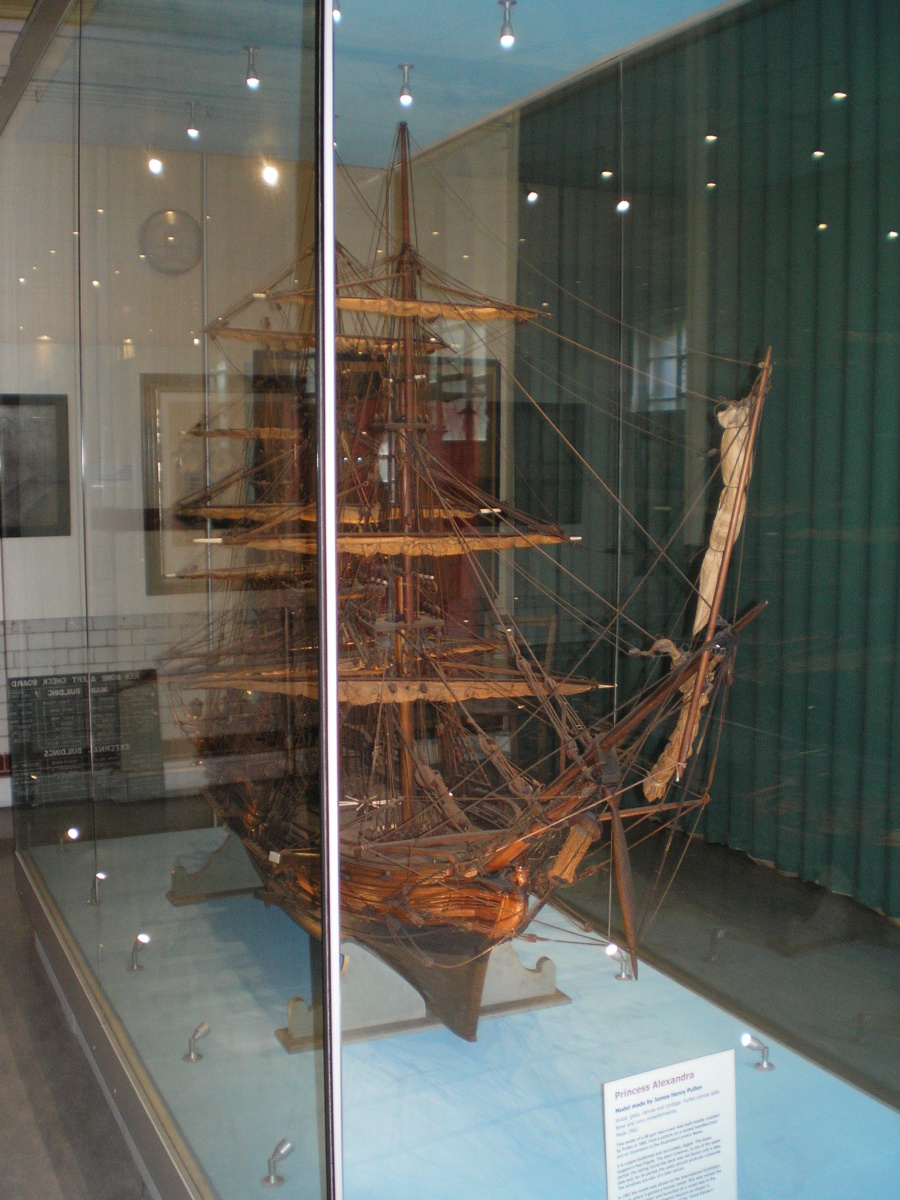
The “Princess Alexandra” on display at the Langdon Down Museum
Pullen's undisputed masterpiece was the “Princess Alexandra,” a model steamship measuring approximately 10 feet in length. It was not merely a decorative model — it was an engineering marvel.
The ship contained intricate internal machinery, working components, and was assembled using over a million tiny wooden pins instead of nails. Every plank, every rope, every fitting was crafted by hand with extraordinary precision. The model took years to complete.
In 1862, an application was made for the ship to be displayed at the International Exhibition in Kensington. Five years later, it won a bronze medal at the 1867 World Exhibition in Paris, astonishing visitors and judges who could scarcely believe it had been made by a single man working within an asylum.
1867 Paris World Exhibition
Bronze medal awarded for the “Princess Alexandra” — one of the most intricate model ships ever constructed by a single craftsman.
The Artist
Drawings & Inventions
Beyond his ship models, Pullen was a prolific draughtsman and inventor. His drawings reveal a vivid imagination and a distinctive artistic style — bold figures, intricate mechanical diagrams, and fantastical designs that blend the whimsical with the technical.
He created elaborate drawings of soldiers, mechanical devices, and architectural structures. Many of his designs show a sophisticated understanding of engineering principles, despite having received no formal education. He also built furniture, carved ivory, and constructed mechanical toys.
Pullen was known to be fiercely protective of his workshop and his work. He fashioned his own locks and security devices, and was said to become agitated if anyone touched his creations without permission — a testament to the deep personal investment he placed in every piece.
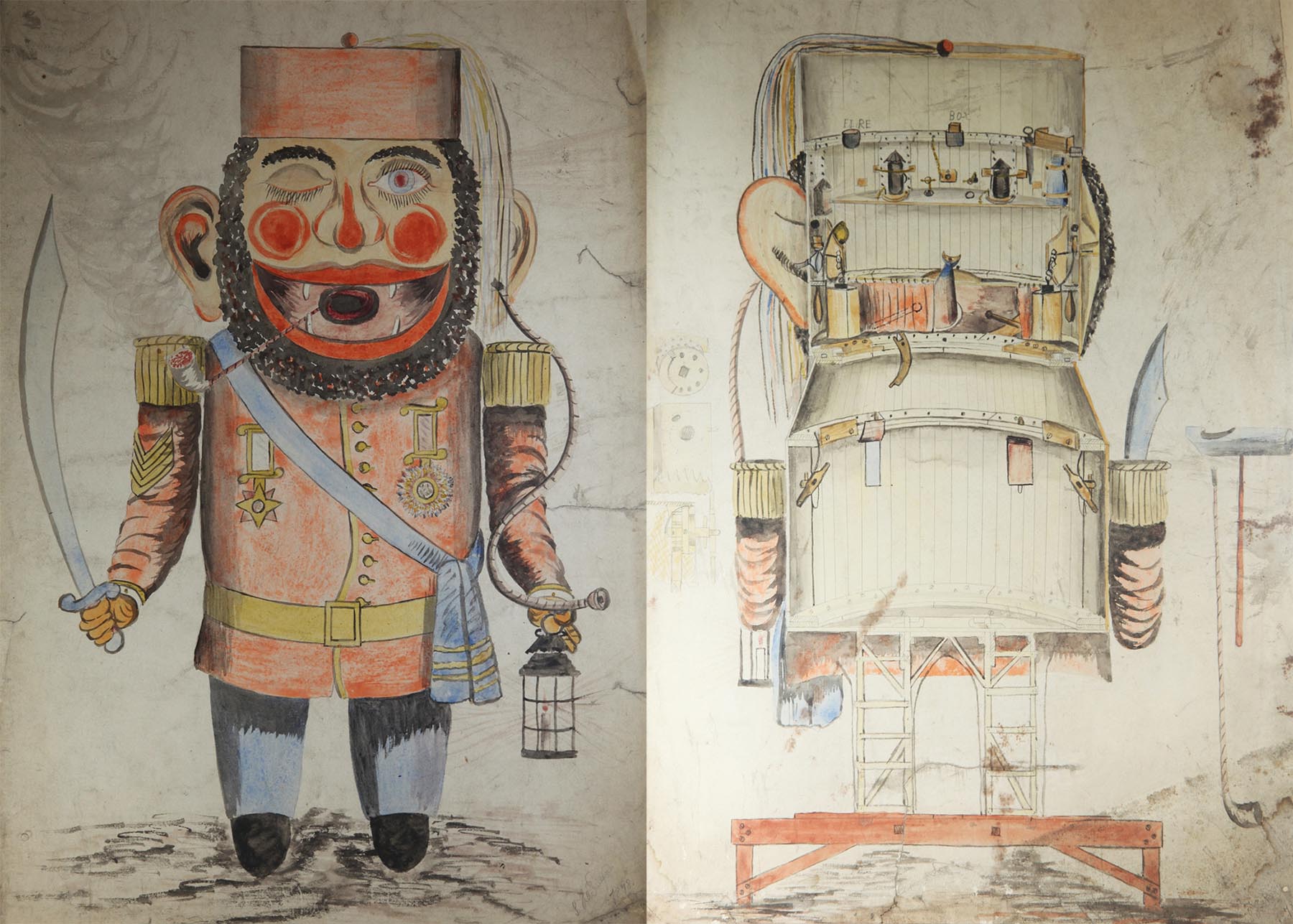
Pullen's drawings: a soldier figure and a mechanical design
A Life in Dates
Pullen's Timeline
1835
Born in Dalston, London
James Henry Pullen is born. He is nearly deaf and mute from birth, and shows early signs of developmental disability. However, he demonstrates a remarkable aptitude for drawing from a very young age.
c. 1850
Admitted to Earlswood Asylum
As a teenager, Pullen is admitted to the newly opened asylum at Earlswood Common. Staff quickly recognise his extraordinary manual dexterity and artistic talent, and he is given access to tools and materials.
1855
Given His Own Workshop
Under the progressive superintendency of Dr. John Langdon Down, Pullen is granted a private workshop within the asylum grounds. Here he begins creating increasingly ambitious models and mechanical devices.
1862
International Exhibition, London
An application is made for his model ship to be displayed at the 1862 International Exhibition in Kensington, bringing his work to the attention of the wider public for the first time.
1867
Bronze Medal at Paris World Exhibition
His masterwork, the Princess Alexandra, wins a bronze medal at the World Exhibition in Paris. The 10-foot-long steamship model, with over a million tiny wooden pins, astonishes visitors and judges alike.
1880s
Royal and Distinguished Visitors
Pullen's fame grows, and his workshop becomes a regular stop for distinguished visitors to the asylum, including members of the royal family and foreign dignitaries who marvel at his creations.
1916
Death at Earlswood, Aged 81
James Henry Pullen dies at the asylum where he spent most of his life. His extraordinary ship models, drawings, inventions, and mechanical devices remain as testament to a remarkable talent.
His Enduring Legacy
Where His Works Live On
After Pullen's death in 1916, his works remained at the Royal Earlswood Hospital for decades. When the hospital closed in 1997, the collection was preserved in the Royal Earlswood Museum on site.
In 2012, the museum closed and its collection — including the “Princess Alexandra” and many of Pullen's drawings and models — was donated to the Langdon Down Museum of Learning Disability in Teddington, where it continues to educate the public about the history of disability care and the extraordinary potential of the human mind.
Pullen's story challenges assumptions about ability and disability. A man who could barely speak or hear created works that won international prizes and astonished royalty. His legacy is a powerful reminder that genius can flourish in the most unexpected places.